

Enabling this setting confirms your approval for cookie implementations throughout the Han’s Laser website, together with the transfer of your personal data to third countries. You may withdraw this authorisation via this interface at any time. Kindly note that all data processing undertaken pursuant to this consent shall remain legally valid prior to your withdrawal.


Driven by the explosive growth of AI computing power demand and the exponential rise in chip power consumption, liquid cooling technology has become the optimal and only solution for efficient thermal management in high-density data centers, thereby sustaining AI compute scaling.
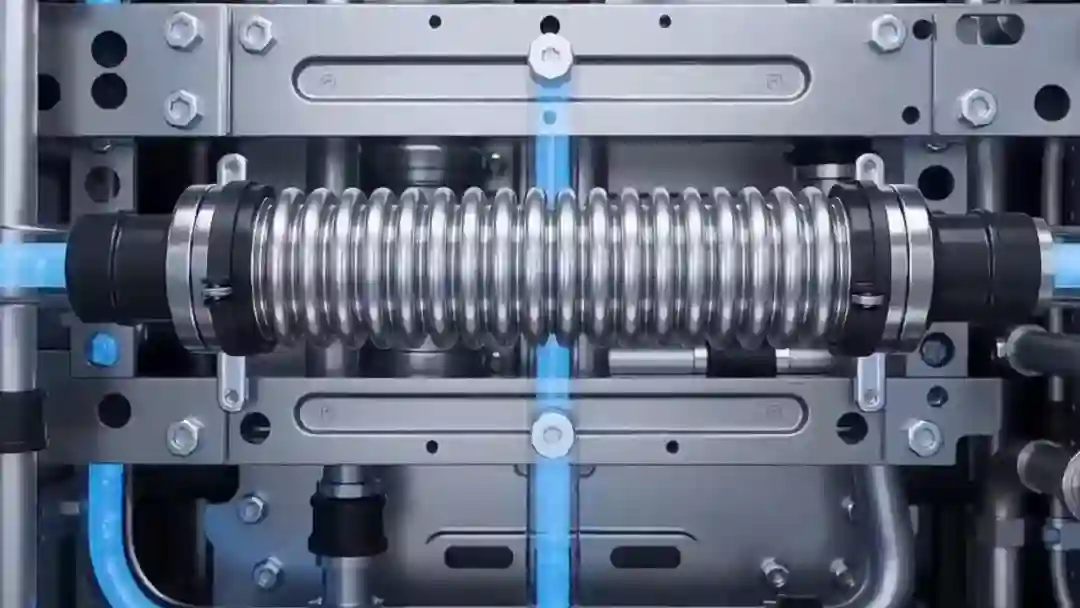
In liquid cooling systems, the tubing network performs the critical function of distributing, delivering, and returning coolant, while being continuously subjected to a coupled service environment of high-pressure coolant flow, high-frequency mechanical vibration, and alternating temperature conditions. With bellows wall thickness as thin as 0.1–0.5 mm and its extremely low structural rigidity, any defects within the welds — such as micro-scale cracks or incomplete fusion — can evolve into leak paths under temperature cycling. "Zero leakage" is a non-negotiable safety red line in liquid cooling systems; even a single-point leak can trigger server downtime, GPU damage, or even the complete failure of a data center valued at tens of millions of dollars. The reliability of the welds, therefore, directly determines the lifetime of AI compute infrastructure.

Traditional brazing and TIG welding have long faced persistent challenges in ultra-thin-walled bellows welding, such as inadequate hermeticity, significant thermal distortion, frequent porosity and fatigue cracking, as well as poor consistency in mass production. At the same time, liquid cooling tubing is highly customized in parameters including inner diameter, wall thickness, bellows pitch, and fitting specifications, which vary with the server rack architectures and coolant types used. This places stringent demands on the flexibility and precision controllability of welding processes.
Laser Welding – The Core Process Enabler for Performance Leap in Liquid-Cooled Servers
As a core foundational process in high-end intelligent manufacturing, laser welding technology offers small heat-affected zones, minimal thermal distortions, smooth and dense weld seams, non-contact welding, and easy integration with automation. By adjusting laser modes and parameters, it enables precise control of energy output to achieve deep fusion of base materials, thereby enhancing the mechanical properties and hermetic sealing reliability of the welds while leaving sufficient thermal clearance in the tube wall to reduce high-frequency mechanical vibration fatigue in the tubing network and mitigate the risk of coolant leakage. This makes laser welding meet the stringent manufacturing standards of liquid cooling systems and resolve the long-standing challenges faced by conventional welding processes.
Equipment Recommendation—Laser Welding System for Liquid-Cooling Bellows
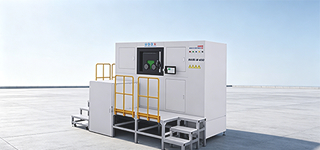
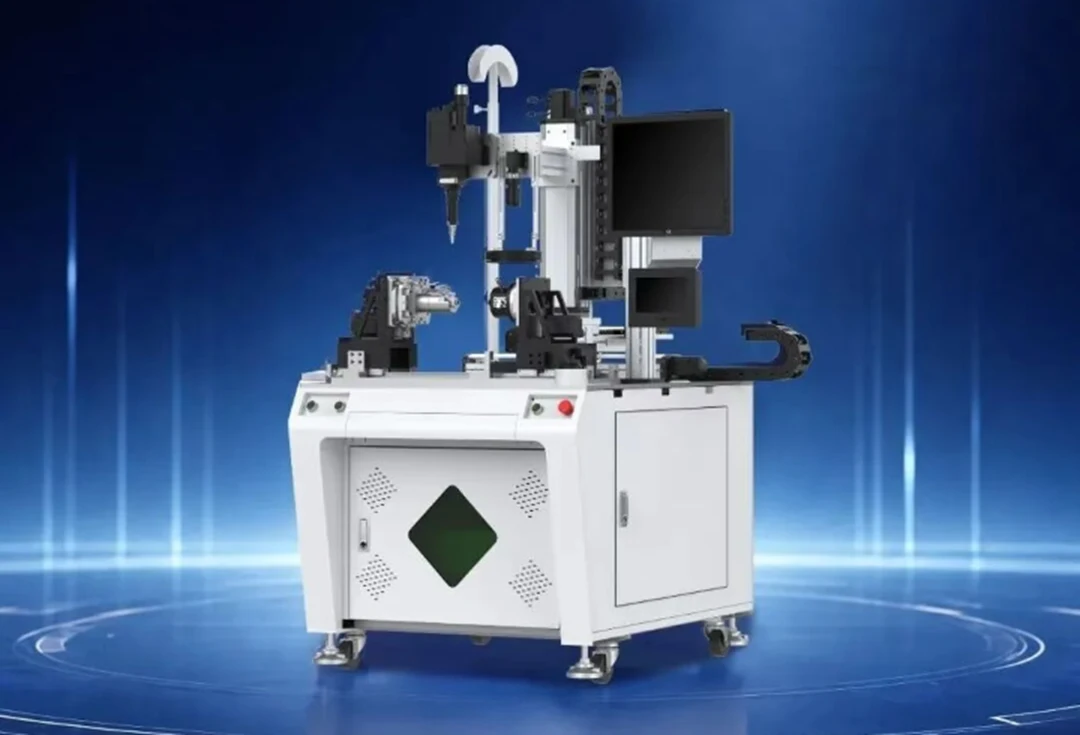
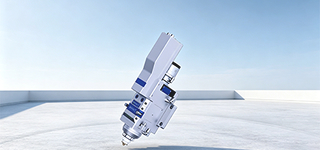
This laser welding system for liquid-cooling bellows, developed by Han's Laser, primarily consists of an XYZ electric motion stage, a fiber laser, a wobble welding head, a high-magnification industrial camera, a rotary table, and dedicated fixturing components. It delivers high welding efficiency and long service life, and is ideally suited for spatter-free, oxidation-free, and distortion-free circumferential hermetic seal laser welding of bellows, which are critical components in liquid-cooled servers and data center CDUs (Coolant Distribution Units).
Laser Welding for Copper-to-Copper Bellows
Laser Welding for Stainless Steel-to-Stainless Steel Bellows
Fixed-Point Rotary Welding with Precision Power Control
The process includes manual loading/unloading, visual positioning, fixture clamping and rotation on a rotary table, and fixed-point rotary welding. With full-range optimization of process parameters and precisely controlled laser power, the system achieves continuous, high-precision circumferential welding for tubular bellows. By exchanging the contour-matching collets, this system enables flexible welding of various bellows, delivering stable and efficient welding performance and significantly improved production line utilization.
Optional In-Process Monitoring Function for Defect Identification and Prevention
The system is standardly equipped with a high-magnification industrial camera for high-precision positioning, and can be optionally fitted with an in-process weld quality monitoring system that enables real-time identification and warning of defects such as porosity, cracks, defocusing, and insufficient fusion. Meanwhile, the full traceability of process data provides reliable support for closed-loop quality control.
High-Speed Wobble Welding for Complex Tubing Configurations
Equipped with a high-speed wobble welding head, the system directs the laser beam to scan along trajectories including "O," "8," "∞," and "-" patterns to expand the effective beam scanning coverage and enhance tolerance to gap variations, effectively addressing the challenges caused by complex spatial layouts and assembly tolerances in liquid cooling tubing.
Establishing a Reliable Thermal Management System for High-Flux Liquid Cooling
Han's Laser makes every weld the cornerstone of secure and stable AI compute operations. We are committed to advancing laser welding technologies for liquid cooling applications, offering comprehensive intelligent manufacturing solutions for a full range of components, including cold plates, bellows, manifolds, and coolant tubes. These solutions enable the stable delivery of high AI compute performance under demanding liquid cooling scenarios, and drive continuous breakthroughs and iterative upgrades across the liquid cooling industry chain.