Technical Background
As global digital transformation accelerates, the demand for AI and large-scale models has surged dramatically, driving chip power consumption into the tens of kilowatts and rack power density to grow exponentially. Computing capacity and energy consumption continue to rise sharply. Traditional air-cooling technologies are no longer sufficient to meet the rapidly escalating cooling demands due to physical limitations, energy efficiency constraints, and reliability issues. Liquid cooling, with its significantly higher specific heat capacity than air cooling, can remove heat more quickly. Thanks to its fast heat transfer path, high heat exchange efficiency, and superior cooling energy efficiency, liquid cooling has become the "optimal solution" and even the "only solution" for data centers to overcome high-power thermal challenges and achieve efficient thermal management.
From a low-carbon and environmentally friendly perspective, liquid cooling delivers excellent energy-saving performance. The PUE (Power Usage Effectiveness) of liquid-cooled data centers can be reduced below 1.2, saving substantial electricity costs annually. It combines low energy consumption with high performance, significantly improving economic efficiency. At the national policy level, liquid cooling is recognized as a key direction for low-carbon development. The "Action Plan for Green and Low-Carbon Development of Data Centers" explicitly states that by the end of 2025, the average PUE of data centers nationwide should drop below 1.5; newly built or expanded large- and extra-large-scale data centers must achieve a PUE under 1.25, while data center projects at national hub nodes must not exceed 1.2 in PUE. The plan also emphasizes promoting energy-efficient technologies and equipment, advancing liquid cooling and evaporative cooling solutions tailored to local conditions, and increasing utilization of natural cooling resources.

Traditional Manufacturing Technologies
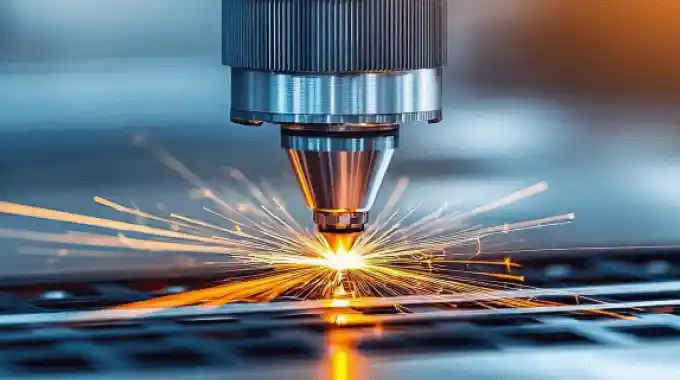
Conventional liquid cooling component manufacturing primarily relies on joining techniques such as argon arc welding, brazing, and friction stir welding. However, these traditional methods fail to meet the demands of next-generation heat exchangers in terms of precision, weld strength, sealing performance, reliability, adaptability to complex geometries, and quality consistency in large-scale mass production. Laser welding, with its advantages of high energy density, minimal heat-affected zone, and superior welding accuracy—unmatched by conventional processes—has become the dominant joining method for liquid cooling components.
Advantages of Laser Welding in Liquid-Cooled Server Components
1. High Welding Precision: Laser welding achieves micrometer-level precision, which is crucial for the tiny components and intricate structures found in liquid-cooled servers. This ensures reliable weld quality and prevents leaks or performance degradation caused by imprecise welding.
2. High Welding Speed: The rapid welding process significantly reduces production cycles and enhances manufacturing efficiency. Given that liquid-cooled servers typically involve numerous weld points, the high-speed capability of laser welding supports large-scale production requirements.
3. Superior Weld Quality: Laser welding produces narrow, deep welds with minimal heat-affected zones and low distortion, helping maintain structural integrity and aesthetic appeal in liquid-cooled servers. Additionally, high-quality welds improve system reliability and durability.
4. Non-Contact Welding: As a non-contact process, laser welding applies no direct physical force to the workpiece during operation. This is especially beneficial for delicate and sensitive components in liquid-cooled servers, as it avoids mechanical stress-induced damage, preserving component integrity and performance.
5. Wide Adaptability: Laser welding can accommodate various materials and different thicknesses. Whether working with metals or certain non-metallic materials, optimal welds can be achieved by adjusting laser parameters. This flexibility gives laser welding a distinct advantage in meeting diverse design and material requirements in liquid-cooled server applications.
6. Automation and Intelligence: Laser welding systems integrate easily with automated production lines, enabling intelligent and automated control of the welding process. This not only boosts productivity but also minimizes human error and ensures consistent weld quality.
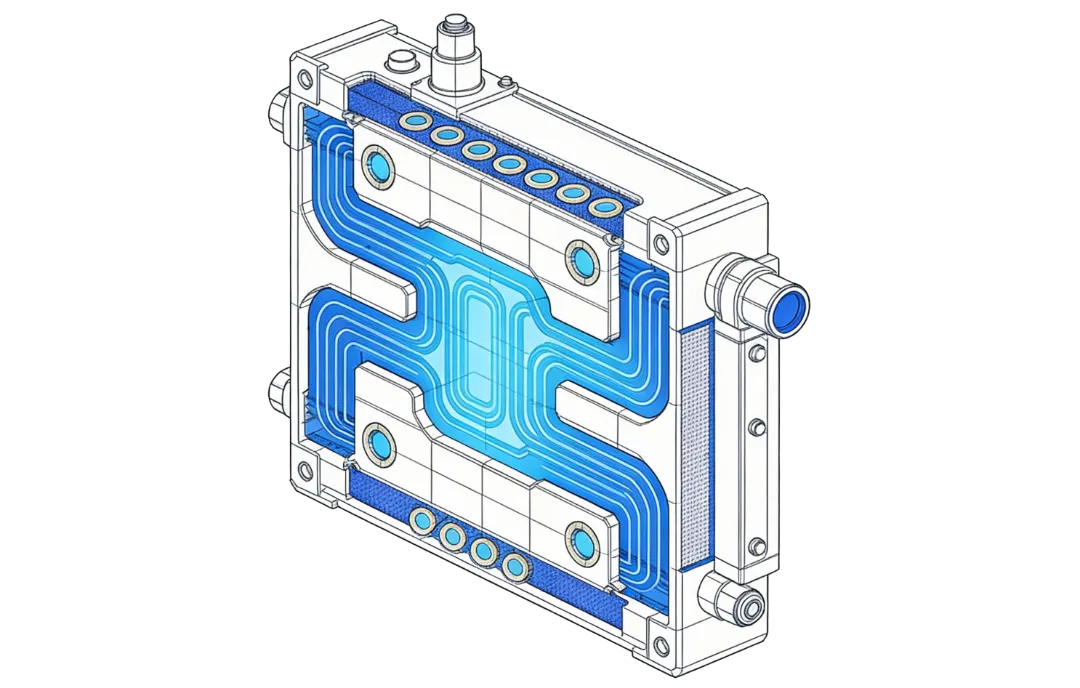
Cold plate liquid cooling is currently the mainstream liquid cooling solution.
The main types of liquid cooling include cold plate, immersion, and spray cooling. Compared to other contact-based liquid cooling methods, cold plate liquid cooling systems deliver coolant directly into the server interior, enabling efficient heat exchange through cold plates that are in close contact with chips. Cold plate cooling can remove 70–75% of the heat generated by equipment within a rack. Since it does not achieve 100% liquid cooling, its cooling performance and energy efficiency gains are slightly lower than those of other liquid cooling methods, and it typically employs hybrid cooling approaches such as air-liquid combination.
Application of Laser Welding in Cold Plate Liquid Cooling Systems
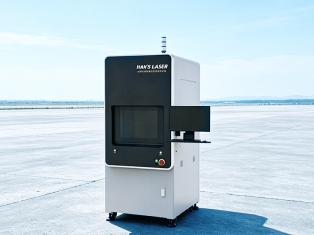
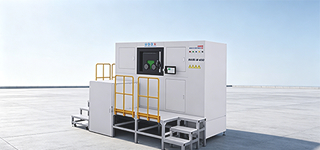
Han's Laser Special Equipment offers a complete laser welding solution for liquid cooling components, covering processing technology, system equipment, and automated integration.
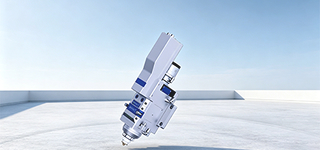
The solution features a high-speed oscillating welding head capable of achieving various oscillation patterns such as circular, Z-shaped, and figure-eight trajectories. This increases the effective spot size and enhances gap tolerance, effectively addressing complex internal piping structures and assembly gaps in liquid cooling systems, enabling highly flexible and adaptable processing. Equipped with intelligent in-process inspection functionality, it enables real-time defect prevention, identification, and full-process data traceability, ensuring high welding efficiency and yield for liquid cooling components.
By leveraging advanced technologies including real-time in-process monitoring, motion trajectory control, and laser beam shaping, the system further achieves defect prevention and process optimization, meeting stringent requirements for sealing performance and weld strength in liquid cooling components, thereby improving product performance and reliability.
Laser Welding Process and Case Studies for Three Major Liquid Cooling Components
1. Cold Plate Liquid Cooling Plate – Manifold Laser Welding
Manifold laser welding refers to the welding of main coolant channels in liquid cooling plates, primarily connecting the main channel to branch connectors. This process demands high precision and reliability, requiring uniform and strong welds with smooth, clean surfaces.
For manifold welding, the Customized 3C Equipment Center and Low-to-Medium Power Welding Light Source Center of Han's Laser have jointly developed a new dedicated welding system. By using a custom-built high-precision rotating fixture, this solution achieves highly concentric connections between stainless steel tubes, ensuring that the final product is free from cracks, porosity, and other defects, while maintaining an appearance consistent with the original material.
Case Study
Welding Materials: 1.1mm stainless steel tube + 1.1mm stainless steel tube
Process Requirements: Seamless connection of stainless steel tubes with tight sealing, no leakage, and sufficient weld strength
Challenges: High concentricity requirement between the two steel tubes
2. Cold Plate Liquid Cooling Plate – Laser Welding of Cold Plates
The cold plate is a core component in liquid cooling systems responsible for heat exchange, significantly affecting chip temperature fluctuations, chip lifespan, and long-term stability. The laser welding process for cold plates uses high-energy laser beams to achieve strong, hermetic bonding between the cover plate and base plate, minimizing the impact of copper's high thermal conductivity and high reflectivity during welding, reducing spatter, lowering porosity, and improving weld quality.
Case Study
Welding Materials: 1.5 mm top copper plate + 2 mm bottom copper plate
Process Requirements: Ensure sealing integrity, high-strength joint, consistent penetration depth, and no oxidation at the weld zone
Challenges: Copper exhibits high thermal conductivity and high reflectivity, and is prone to oxidation
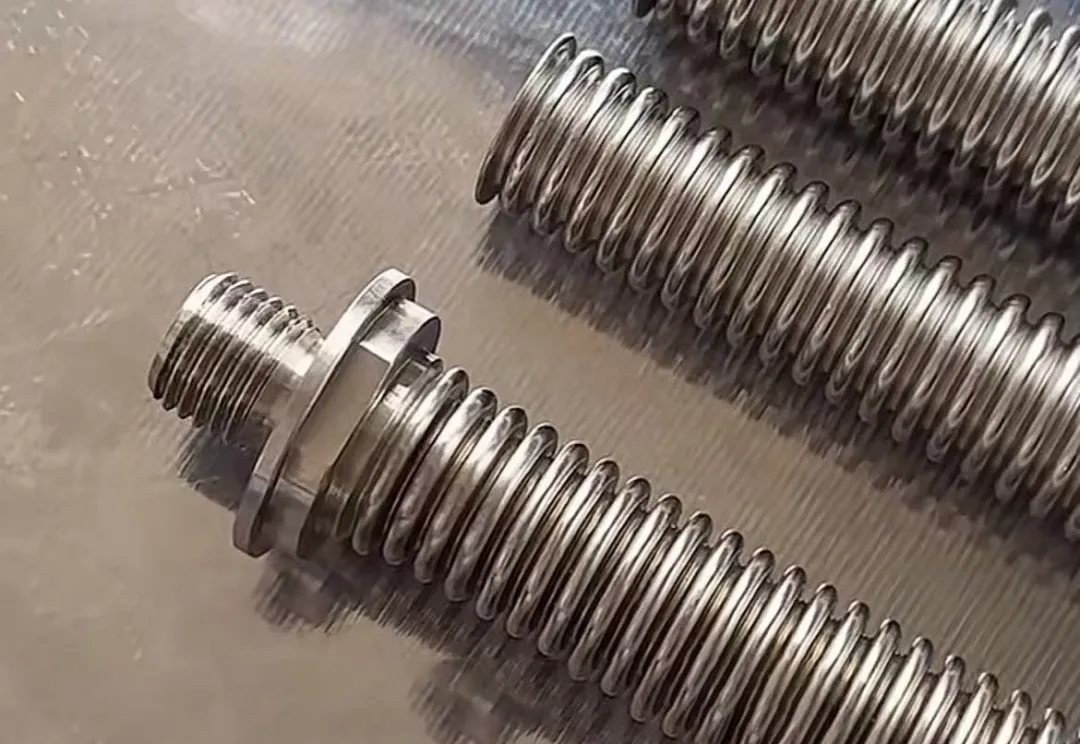
3. Cold Plate Liquid Cooling Plate – Bellows Laser Welding
Bellows laser welding is a precision welding technology that utilizes high-energy-density laser beams, particularly suitable for complex metal tubing such as bellows with high precision requirements. Its key advantages include minimal heat-affected zone and high weld quality, effectively preventing deformation and oxidation issues commonly associated with traditional welding methods.
Case Study
Welding Materials: 0.8mm stainless steel tube + 0.8mm stainless steel tube
Process Requirements: Ensure reliable sealing performance, prevent deformation during welding, and avoid oxidation at the weld joint
Challenges: Complex structure prone to deformation, susceptibility of metal to oxidation, extremely high sealing requirements
Laser Welding Drives Value Reconfiguration and Performance Leap in Liquid-Cooled Servers
Han’s Laser will actively explore advanced applications of liquid-cooled laser welding technology, collaborating with more product centers to build a "cooling" engine that propels the digital economy and artificial intelligence toward higher dimensions. This integration will enable liquid cooling to deeply merge with high-efficiency computing power and ultra-low PUE, accelerating the development of a complete, mature, intelligent, green, and efficient liquid-cooling industrial chain.