In recent years, with the explosive growth in demand for power density in electronic devices and components across fields such as artificial intelligence, new energy vehicles, 3C consumer electronics, and 5G communications, industry forecasts suggest that the thermal management components sector will grow at a compound annual rate of approximately 10% to 15% between 2025 and 2035. By 2035, the global market size for thermal management components could reach $300–400 billion, with China accounting for over 30% of this market, becoming the world's largest producer and consumer of thermal management components. Heat sinks have evolved from being "auxiliary parts" into key core components that determine equipment performance, reliability, and lifespan.
01. Four High Heat Dissipation Demand Segments
Artificial Intelligence (AI) / Data Centers
Require ultra-high thermal efficiency under extreme computing density, addressing the peak heat flux from high-performance GPU/ASIC chips, relying on advanced solutions such as high-density heat spreading and liquid cooling technologies.
02. 3C Consumer Electronics
Balance performance and heat dissipation within extremely compact form factors, utilizing ultra-thin vapor chambers and graphene materials for rapid heat distribution to ensure optimal user experience.
03. New Energy Vehicles
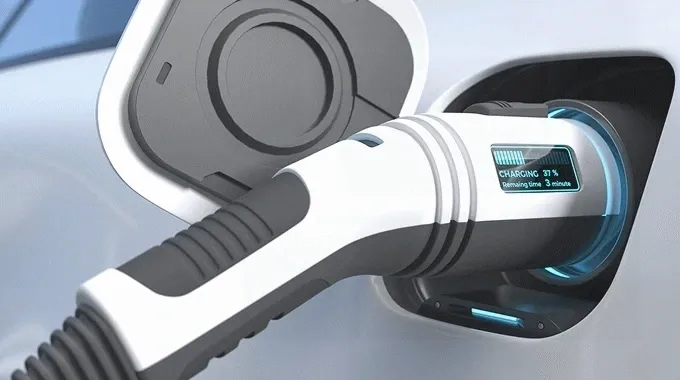
Focus on high safety and reliability, ensuring uniform battery pack temperature and efficient heat dissipation for high-power-density power electronics, demanding lightweight and highly integrated thermal management systems.
04. Communication Base Stations
Face harsh outdoor environments and continuous high-power operation, requiring thermal solutions with high reliability, corrosion resistance, and robust sustained cooling capability.
Thermal management technology has become a key common foundation for overcoming performance bottlenecks across various fields and ensuring stable system operation, driving continuous innovation in materials and system-level solutions. This has directly led to the evolution of thermal design toward "ultra-high efficiency, precision complexity, and integration," thereby imposing revolutionary demands on manufacturing technologies.
Laser Technology in Heat Sink Welding
In the field of thermal management, the most technologically advanced products are vapor chambers and cutting-edge loop heat pipes, representing the pinnacle of current passive cooling solutions. Vapor chambers have become a key component for addressing the "thermal bottleneck" in smartphones and high-performance graphics chipsets. The technological barriers of vapor chambers are exceptionally high, manifesting in three main aspects:
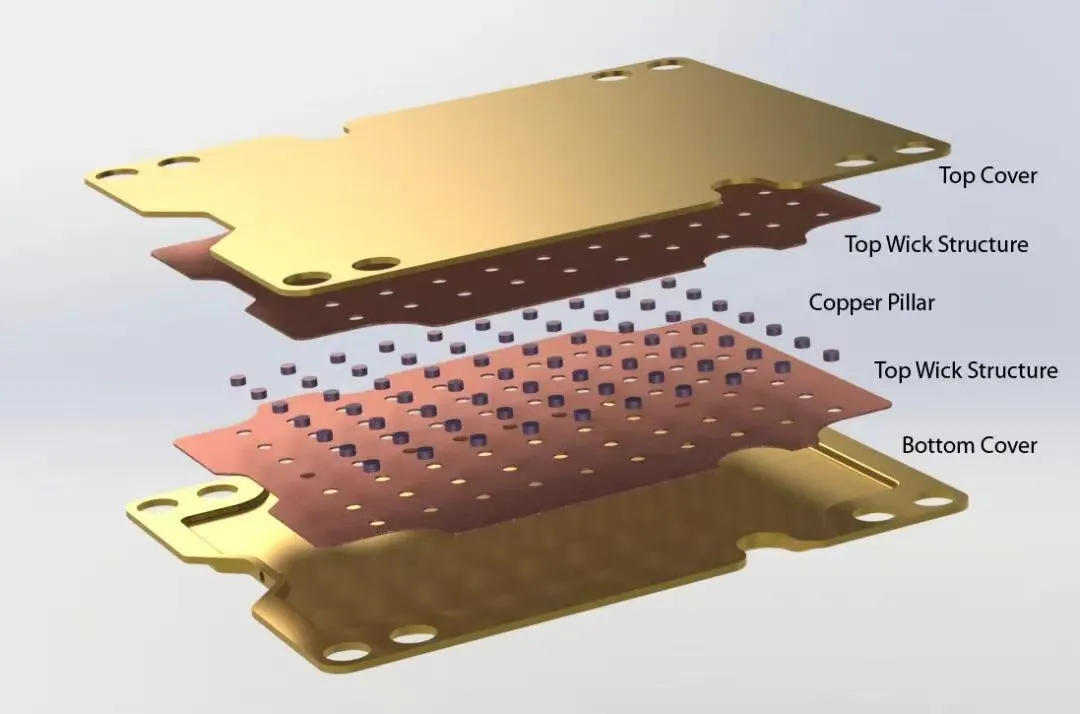
Precision internal structure: At its core is a micrometer-scale capillary structure (such as sintered copper powder) inside. The uniformity, porosity, and strength of this structure directly determine the heat transfer limit and reliability. Its design and manufacturing process represent the industry's highest level of secrecy.
Extreme manufacturing challenges: Achieving high-vacuum sealing within ultra-thin cavities (now below 0.3 mm) while precisely injecting working fluid presents significant difficulties. Ensuring cavity flatness over large areas, absolute welding reliability, and long-term leak-free operation involves highly complex material and process control.
Complex thermal physics design: It requires precise balancing of capillary forces, fluid flow, and phase change efficiency to handle extreme heat flux densities on chips reaching hundreds of W/cm². The design tolerance is extremely low
VC Vapor Chamber Core Principle
Heat is continuously transferred through a phase-change cycle based on "liquid evaporation absorbing heat and vapor condensation releasing heat," operating in a closed loop via four steps:
1. Heat Absorption and Evaporation
Heat from the source contacts the bottom of the vapor chamber, transferring thermal energy into the internal cavity. In the vacuum environment, a low-boiling-point working fluid (pure water) absorbs heat, boils, and transitions from liquid to vapor.
2. Vapor Diffusion
The vapor rapidly diffuses throughout the vacuum cavity toward cooler, lower-pressure regions, evenly distributing heat from point or line sources across the entire surface of the vapor chamber.
3. Condensation and Heat Release
The vapor reaches the cold condensation zone equipped with heat-dissipating fins, where it releases latent heat and recondenses into liquid. The heat is then conducted through the shell to the fins and carried away by airflow.
4. Liquid Return
The condensed liquid returns automatically to the evaporation zone via capillary force generated by the wick structure, requiring no mechanical pump throughout the process.
Five Laser Welding Processes and Cases for VC Heat Spreader
01 VC Vapor Chamber - Spot and Mesh Laser Welding
Process Overview
Spot and mesh welding is used to fuse the copper mesh capillary structure with the baseplate, establishing a complete heat dissipation pathway. The process requires uniform and robust welds that do not compromise thermal performance, effectively addressing deformation issues common in ultra-thin copper materials. It is a critical step in enhancing both the thermal efficiency and yield of VC units.
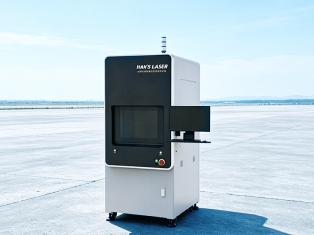
The Mobile Component and Heat Sink Welding Project Center at Han's Laser has independently developed precision laser micro-welding equipment capable of millijoule-level accurate heat input control. This enables reliable localized fusion between the copper mesh and baseplate, ensuring no puncture or leakage in ultra-thin VCs and eliminating visible weld marks on the backside. It is currently the only solution in the industry capable of stably controlling micrometer-level weld depth.
Case Study
Welding Materials: 0.055mm Copper Mesh + 0.06mm Copper Sheet
Process Requirements: Minimize broken wires in the mesh, prevent backside punctures, ensure strong, non-detachable welds
Challenges: Eliminate cold soldering and delamination, achieve micrometer-level precision, melt depth ≤30μm
Inspection Results: For each batch of 32 units, all weld depths were consistently maintained below 25μm, with no defects such as punctures or excessive melt depth observed in metallographic cross-section analysis
02 VC Heat Spreader - Pre-Fixation Laser Welding
Process Introduction
Laser spot welding is used to precisely join the upper and lower covers of the VC, achieving pre-assembly positioning. This method offers high precision, a narrow heat-affected zone, and strong joint strength, thereby improving assembly accuracy and mass production efficiency. It is suitable for ultra-thin and complex VC structures and is widely applied in consumer electronics and data center thermal management products.
Case Study
Welding Materials: 0.1mm copper top cover + 0.15mm copper bottom cover
Process Requirements: Weld points must have sufficient strength, with no cold welding or penetration; destructive testing should show base material fracture rather than weld failure
Challenges: Stable output during large-area galvanometer scanning, precise control of heat input, and consistent melt depth across the entire weld area.
03 VC Heat Spreader - Edge Sealing Laser Welding
Process Overview
A critical process for ensuring the airtightness of VC cavities, this method uses laser welding to join the edges of the upper and lower cover plates, forming a continuous sealed seam. The micrometer-level narrow weld significantly reduces welding deformation, maintaining surface flatness and structural integrity. Compared to traditional brazing, it minimizes contamination and lowers energy consumption.
Case Study
Welding Materials: 0.15mm top copper plate + 0.2mm bottom copper plate
Process Requirements: Continuous sealing seam welding on copper alloy covers, with controlled deformation and sufficient weld strength
Challenges: Ensuring stable welding process, uniform melt depth across entire area, constant welding speed along complex paths, and precise heat input control
04 VC Vapor Chamber - Sealing Laser Welding
Process Description
Laser energy is focused on the port location to melt metal and form a sealed weld, locking the vacuum chamber and internal working fluid to prevent leakage. With micrometer-level precision, this process accommodates ultra-thin VCs of 0.2–0.3 mm thickness, offering minimal thermal deformation and high reliability, making it a core technology for mass production of vapor chambers.
Case Study
Welding Materials: 0.1 mm pure copper + 0.1 mm pure copper end sealing welding
Welding Requirements: Stable welding with no spatter or cold joints; sealed chamber capable of withstanding standard atmospheric pressure.
05 VC Vapor Chamber - Laser Welding of VC to Structural Components
Process Features
High Precision: Micron-level weld control to prevent cold welding and missed welds;
Low Heat Affection: Localized heating minimizes deformation of ultra-thin VC, preventing internal working fluid leakage;
Automation Compatibility: Integrable into fully automated production lines, ensuring consistency across large-volume manufacturing.
This process ensures tight bonding between the VC and the device's structural components, directly determining the thermal performance and long-term reliability of electronic devices.
Case Study
Welding Materials: 0.05–0.25 mm copper / stainless steel / composite materials + 0.3–0.6 mm aluminum / stainless steel / composite materials
Welding Requirements: Stable welding process, smooth surface finish, sufficient strength, no spatter or cold welds
Industry Implementation Achievements
Hans Laser has developed a dedicated precision laser welding process for the entire VC heat spreader welding workflow, which has been adopted and mass-purchased by leading domestic and international VC manufacturers, establishing the company's leadership position in VC heat spreader laser welding.