

Enabling this setting confirms your approval for cookie implementations throughout the Han’s Laser website, together with the transfer of your personal data to third countries. You may withdraw this authorisation via this interface at any time. Kindly note that all data processing undertaken pursuant to this consent shall remain legally valid prior to your withdrawal.


Long-wavelength 2μm lasers feature distinctive absorption advantages for water molecules, polymer materials and biological tissues, making them the primary light source for precision nonmetallic machining, minimally invasive medical treatment and advanced scientific research. However, high-power 2μm lasers across the industry have long suffered technical drawbacks including severe power attenuation, poor component stability and inferior long-term reliability, creating high barriers to mass production and stable operation of kilowatt-class models.
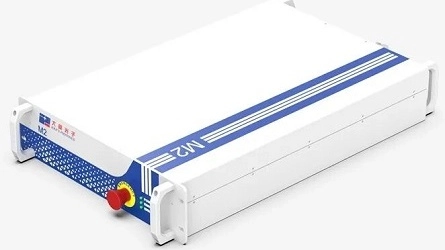
With years of dedicated R&D in laser technology, Han's Laser officially releases the 2μm 1000W Thulium-Doped Fiber Laser (TDFL) HSC-1000-G3-GF. Adopting differentiated complete machine integration solution, fully self-developed core optoelectronic components and high-precision multi-mode control, the laser has passed stringent ultra-long aging verification and completely solved the technical challenge of unstable long-term operation of high-power 2μm lasers, setting a new technical benchmark for kilowatt-class 2μm fiber lasers and demonstrating prominent differentiated competitive advantages over competing products.
1. Full-Chain Self-Developed Fiber Laser System
Supported by Han's Laser fully self-developed system covering specialty fibers, core fiber components and high-power fiber lasers, the product achieves full-chain independent development ranging from gain media, core components to the complete optical path.
lFiber absorption parameters and spectral matching characteristics are precisely adjusted to suppress relaxation oscillation and raise pump energy conversion efficiency.
lCustom rare-earth doping proportions and homogenization processes are adopted to reduce fiber internal material defects and ion agglomeration, ensuring homogeneous luminescence and long-term equipment reliability.
lA proprietary refractive index profile structure is designed to enhance mode field confinement and fundamentally relieve transverse mode instability (TMI) under high-power working conditions.
The entire optical path is deeply coupled with self-developed components and dedicated matching algorithms, systematically solving technical issues including power attenuation, beam quality degradation and inadequate output stability found in high-power lasers.
2. Self-Developed Core Optoelectronic Components
Pump sources, low-loss pump combiners and other key optical components are independently developed and mass-produced, enabling precise matching between the performance of core components and the kilowatt-class 2μm optical path.
l 2 μm dedicated long-wavelength pump source: Equipped with 793 nm high-power laser chips featuring industry-leading luminous efficiency. The module adopts parallel seam welding to achieve superior tightness of pump assemblies. The leak rate tested by a helium mass spectrometer leak detector is lower than 10⁻⁸ Pa·m³/s, meeting standards close to those of optical communication industry.
lSelf-developed dedicated pump combiner for 2μm: Delivers high coupling efficiency and low insertion loss under high-power operation. It withstands continuous 500-hour operation and thermal shock cycling ranging from -40 ℃ to 80 ℃.
lSelf-developed 2μm Cladding Power Stripper (CPS): The signal insertion loss is as low as 0.05 dB with nearly no degradation of beam quality. The cladding stripping efficiency reaches up to 18 dB, and the maximum bearable power hits 1000 W.
lSelf-developed laser output connector: It attains transmittance up to 99.99% at 1940 nm. Even under harsh operating conditions, it can output kilowatt-class laser beams with excellent beam quality over long transmission distances.
3. Industry-Leading Output Power Performance
Han's Laser’s 2μm fiber laser demonstrates prominent advantages among commercially available kilowatt-class 2μm products in terms of power adjustment flexibility and mode diversity:
lFull-range continuous power adjustment: This 2μm fiber laser supports stepless linear adjustment ranging from 10% to 100% is available. The output remains stable across the entire range without power discontinuity or fluctuation, with a linearity R² value reaching 0.9997, far exceeding mainstream industry levels.
lReal-time closed-loop power feedback: Equipped with an embedded dynamic power compensation mechanism to sustain stable laser emission continuously.
4. Stringent Aging Tests Verify Industrial-Grade Long-Term Reliability
Han's Laser has conducted stringent long-duration intermittent uninterrupted aging durability tests on the 1000W fiber laser of the 2μm series. Measured data fully verifies its industrial-grade long-term reliability, with all indicators exceeding the published performance benchmarks of similar high-power 2μm products:
lThe RMS power fluctuation is merely 0.916%, considerably lower than the typical level of mainstream high-power 2μm counterparts (competitors generally achieve above 1.5%);
lThe power remains stable during long-term operation with negligible power attenuation. The output only fluctuates gently under prolonged thermal load;
lMultiple power-on/power-off cycles and frequent alternations between multiple operating modes are completed throughout the whole test cycle. No optical path drift, component failure or sustained output decline occurs. The test fully validates the laser’s resistance to power attenuation and working condition fluctuations, complying with industrial standards for 24/7 nonstop operation all year round.
5. Core Applications
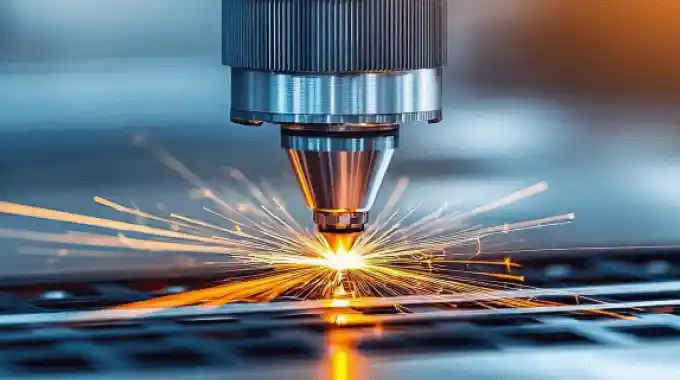
Focusing on precision non-metallic machining, this 2μm 1000W fiber laser enables precision cutting, welding and drilling of carbon fiber/glass fiber composites, engineering plastics, optical films, glass and ceramics, and is widely adopted in industries including new energy, aerospace and consumer electronics. For instance, it can replace holmium lasers to implement lithotripsy in medical applications. In scientific research, it functions as a mid-infrared pump source to support atmospheric remote sensing and lidar research. Special application scenarios involve power line obstacle clearance, anti-drone countermeasures and more.