


Cookies Consent

Required Cookies (Necessary)
Optional Cookies (statistical analytics cookies)

Enabling this setting confirms your approval for cookie implementations throughout the Han’s Laser website, together with the transfer of your personal data to third countries. You may withdraw this authorisation via this interface at any time. Kindly note that all data processing undertaken pursuant to this consent shall remain legally valid prior to your withdrawal.

The application of ultrafast laser in aircraft engines

The application of ultrafast laser in aircraft engines

Mar 08, 2024
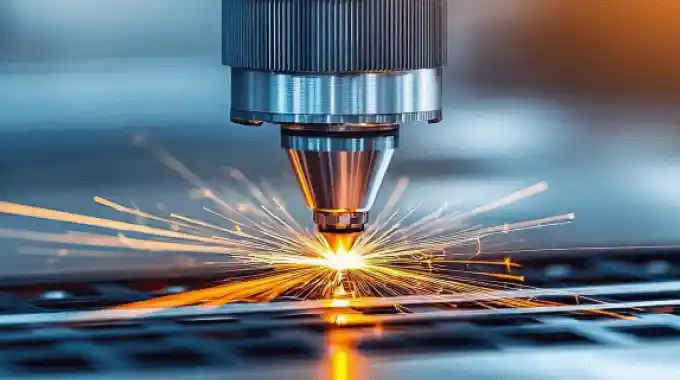
Ultrafast laser technology is an advanced technology that generates high-intensity light pulses in an extremely short period of time, and the application in the aviation field is increasingly attracting customer's attention. This technology is known for its outstanding performance in fields such as measurement, manufacturing, and communication, and its widespread application in aviation engineering provides new possibilities for improving the performance and safety of aircraft.


Ultrafast laser generally refers to lasers with a pulse width less than 10-12s, mainly including femtosecond laser (1fs=10-15s) and picosecond laser (1ps=10-12s). Due to the extremely short action time of ultrafast laser pulses, they can instantly generate extremely high peak power. Therefore, unlike common laser processing methods that work on materials through photothermal effects, their processing mechanism is direct electron state absorption, which transfers energy to the lattice of the material, destroy its binding bonds, and finally erupt in the form of plasma towards the surrounding area. Moreover, compared to the conventional continuous laser thermal processing method, ultrafast laser processing is more in line with the "cold processing" method. From the mechanism of laser material interaction, femtosecond laser processing can achieve high precision, small heat affected area, no hot melt, no recast layer, and no microcracks for material removal. It is one of the best methods to improve the surface integrity of the gas film hole formation of aircraft engine turbine blades.

 
Top